
Simulation Games










Simulation Games recreate a slice of life or a whole system and let you run it your way, whether that means managing a water park, raising a duck, guiding a streamer's career or setting planets on a collision course. This shelf collects games where the fun comes from understanding how something works and then pushing it.
Systems You Can Poke and Prod
Every one of the Simulation Games here is built on rules. Guests need clean paths, birds need feed, planets follow gravity. The enjoyment comes from learning those rules and then testing what happens when you bend them a little, or a lot.
That curiosity is what separates Simulation Games from pure action. You win by understanding cause and effect, not by reacting faster. A small change in one place, like a higher ticket price or a heavier sun, ripples through the whole system.
- Clear rules: the system behaves consistently, so you can learn it.
- Meaningful choices: each decision shifts the outcome.
- Feedback: numbers, graphs or visible changes show results.
- Room to experiment: trying something odd is part of the fun.
Running a Business or a Career
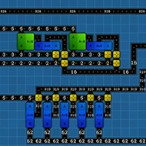
Management-focused Simulation Games put you in charge of money and people. Waterpark Simulator starts with a small pool and grows into a park full of slides and staff. Eggstreme Farming turns egg trays and a vending machine into a business with licenses to unlock.
Streamer Life Simulator 2 scales the idea down to one person, balancing hunger, sleep and bills against the slow climb to a bigger audience. Each of these Simulation Games rewards careful budgeting over quick spending.
Players who like spreadsheets feel at home here. So do players who simply enjoy watching a small operation grow into something busy and self-sufficient.
Lives, Families and Little Creatures
Another branch of Simulation Games focuses on life itself. The Game of Life 2 follows a car full of family pegs from college to retirement, with every spin changing the path. Duck Life: Treasure Hunt lets you train a duckling into a capable explorer.
ClanGen simulates a whole Clan of cats over many moons, with births, illnesses and relationships rolling out of its event system. These Simulation Games make you care about individuals inside a larger system.
The same feeling powers the wolf-family title at the heart of Family Time Game, where a father watches his household grow every night and has to build cots, pens and houses fast enough to keep up. Our building guide explains how that construction works.
Sandboxes on a Grand Scale
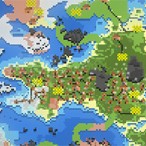
At the far end of the shelf are sandbox games with no fixed goal. Universe Sandbox 2 lets you add black holes to the Solar System or crash moons into planets. WorldBox hands you the tools to shape continents and watch kingdoms rise and fall.
Dummynation narrows the focus to a single country trying to grow into a world power, which makes it a quick strategic simulation rather than an open toy.
These titles are ideal for curious players. There is no wrong way to play them, and the most memorable sessions often come from asking a simple question and seeing what the system does with it.
Getting Started Without Feeling Lost
Simulation Games can look intimidating at first, with menus, numbers and many moving parts. A few steps make the first hours smoother.
- Start with the default scenario before changing settings.
- Focus on one system at a time, such as income or food.
- Watch the feedback after each change instead of making many at once.
- Save before big experiments so you can roll back.
- Use tutorials, even if you plan to skip them later.
Most Simulation Games become clearer after a short learning curve. Once the basics click, the depth turns into the main attraction rather than a hurdle.
Simulation Meets Survival
Some simulations add danger. When resources can run out or something threatens the people you manage, the experience moves closer to survival.
If that tension appeals to you, the survival shelf adds rationing, dark nights and difficult choices on top of the management. Many players alternate between the two, using calm sims to unwind and survival runs for adrenaline.
Both share the same core: understanding a system well enough to keep it running, even when the numbers start moving against you.
The Joy of Watching Something Work
The most satisfying moment in Simulation Games is when your setup runs smoothly. Guests flow through the park, the coop fills trays on schedule, the Clan grows stronger, and you can sit back and watch.
That moment is earned through planning and experimentation, which is why these titles keep players busy for so long. Every game here hides more depth than its first hour suggests, and returning to an old save with fresh ideas often reveals strategies you missed the first time. Pick a system that interests you, learn its rules and see how far you can take it.