
















Beltmatic
In Beltmatic you start with a field of number tiles and a single hub asking for a specific number, which matters because every belt, extractor and math operator you place exists only to build that number automatically. It is a factory game where the resources are numbers and the machines are addition, multiplication and their friends.
Turning Numbers Into a Factory in Beltmatic
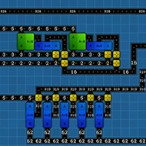
Extractors placed on number tiles produce a steady stream of that number. Belts carry the numbers to operators, which combine two inputs into a new value, such as adding or multiplying them. The result then travels to the hub, which accepts only the number it currently requests.
Each completed request raises the hub's level. New requests ask for bigger and stranger numbers, and soon a single extractor feeding a single operator is nowhere near enough.
Beginners often build long chains of additions to reach a large number, which works but wastes space. Multiplication and smarter combinations reach big numbers with fewer machines. Puzzle lovers enjoy the math, while factory fans enjoy the clean layouts.
Operators, Upgrades and Bigger Requests
As the hub levels up, new operators unlock, letting you subtract, divide or use more advanced operations. Upgrades also improve speed and capacity.
Planning space becomes important. A messy factory makes later changes hard, so leaving room around the hub and keeping belts in straight lines saves a lot of rebuilding later on.
Experienced players build modular sections that produce useful numbers, then combine them for each request. That approach is similar to organising teams of workers in Stick War: Legacy or the job-based bases in Palworld, though here the workers are belts and operators.
The Satisfying Side of Beltmatic
Watching numbers flow along belts and arrive at the hub is relaxing. Many players describe it as a calm factory game with a gentle learning curve.
Some players feel the late game becomes repetitive once the best setups are known. Others enjoy optimising for space and speed, rebuilding whole sections just to make them tidier, the same urge that drives players to perfect every corner of a base or a pen.
It works as a bridge between puzzle games and automation sims, and players who like math find it especially rewarding. Fans of system-building might also enjoy the physics experiments in Universe Sandbox 2.
Factory Questions
How do you make a large number?
Use multiplication instead of long chains of addition. Combining a few extractors with multipliers reaches big numbers efficiently.
What happens when the hub levels up?
It requests new numbers and unlocks new operators and upgrades. Each level makes the factory more capable.
Do you need to be good at math?
Basic arithmetic is enough to start. Planning efficient combinations becomes easier with practice.
Beltmatic turns arithmetic into a busy little factory, and the moment a perfectly planned line of extractors, belts and multipliers delivers the exact number the hub wanted is pure satisfaction.